You're Already Paying for It: The Wasted Economics of Skipping Office Hours
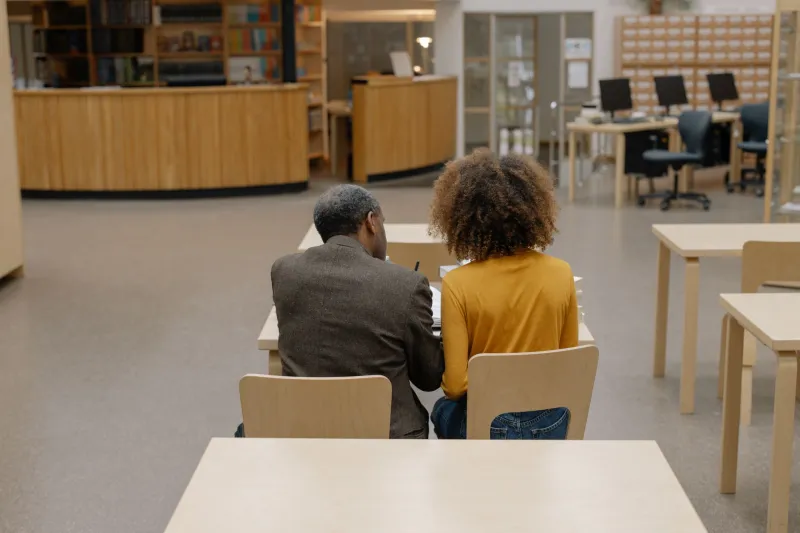
Ask a college senior to itemize what their tuition actually buys and the list grows short fast: lectures, a gym membership, maybe a counseling center they never visited. But one of the most valuable components of a university education — direct, one-on-one access to a subject-matter expert — goes unredeemed by an overwhelming share of the student body. Faculty office hours are, in effect, a prepaid professional consultation service. Most students never cash in.
The Arithmetic of Avoidance
Consider the economics. At a private university charging $60,000 annually, a student taking five courses is paying roughly $12,000 per class. A typical course includes around 35 hours of instructor-led time. Even a modest estimate puts the per-hour cost of instruction in the hundreds of dollars. Office hours extend that access for free — or rather, for money already spent.
Yet national surveys consistently suggest that fewer than a quarter of undergraduates attend office hours even once per semester, and the students who show up tend to be the ones who need them least. High performers, the very students who could leverage faculty relationships into research positions, fellowships, and graduate school endorsements, are disproportionately absent.
The paradox has a logic to it. Struggling students come seeking answers. High achievers stay away for the same reason: they don't want to be seen as someone who needs help. Office hours, in their mental accounting, are remedial infrastructure — a signal of weakness rather than a venue for ambition.
What Professors Wish Students Understood
Faculty members describe the reality very differently. In conversations with advisors across several large public and private universities, a consistent theme emerges: office hours are where the transactional classroom gives way to something closer to apprenticeship.
"The students who visit me in the first three weeks of the semester are, almost by default, the ones I can write a real letter for in December," one professor of economics at a Midwestern flagship told us. "I have hundreds of students. A letter for someone I've only seen in a lecture hall seat reads like a form letter, and every admissions committee can tell."
Career counselors frame it in more strategic terms. Recommendation letters, research assistantships, thesis advising, departmental awards, and even first job leads flow disproportionately through faculty networks. A student who has never sat across a desk from a professor has, in effect, opted out of that distribution system.
There is also a quieter benefit: calibration. Professors have seen hundreds of careers launch from their disciplines. A fifteen-minute conversation about whether to pursue graduate school, which subfields are hiring, or whether a particular internship matters can save a student a semester of misdirected effort.
Why the Smartest Students Talk Themselves Out of It
The barriers are rarely about time. Counselors point to three recurring psychological traps:
Impostor anxiety. High achievers fear their questions will sound unsophisticated. In practice, professors report the opposite — a well-prepared, curious question is a pleasure after hours of no-shows and deadline panic.
The competence myth. Many students absorbed the idea, somewhere between AP courses and merit scholarships, that needing guidance contradicts being gifted. Graduate school and professional life dismantle this myth brutally; better to practice discarding it early.
No urgent problem. Office hours carry a stigma as a place you go when something is broken. But the highest-return visits are the ones made when nothing is wrong — a question about a lecture, a curiosity about a professor's research, a request to hear how they entered the field.
A Practical Playbook for the Fifteen-Minute Visit
For students ready to redeem what they've already paid for, career advisors suggest a simple progression:
-
Go early, go small. Attend within the first month with one genuine question from the reading or lecture. Low stakes, real content.
-
Do thirty seconds of homework. Skim the professor's recent work or departmental bio. Referencing it once signals seriousness without flattery.
-
Ask one forward-looking question. "What should a student who wants to do X be doing right now?" invites mentorship in a way that grade questions never do.
-
Close the loop. Return once more in the semester, then follow up after an exam or project with a brief thank-you. Relationships compound through repetition, not intensity.
-
Convert the relationship. By the second course with a professor, ask about research openings, directed reading, or whether they'd be comfortable serving as a reference. Faculty say yes to students they know; they cannot say yes to students they've never met.
The Long Shadow of a Short Conversation
The students who understand this early gain an advantage that no GPA point can match: advocates. When a graduate program calls for a letter that "speaks beyond the transcript," when a fellowship committee asks who can vouch for a candidate's intellectual drive, the answer depends on conversations that happened years earlier, in fifteen-minute increments, during office hours no one else attended.
Tuition buys access. Whether it buys advantage depends entirely on whether a student walks through the door.