The Unoptimized Hour: What Deliberate Emptiness Teaches That a Packed Schedule Never Will
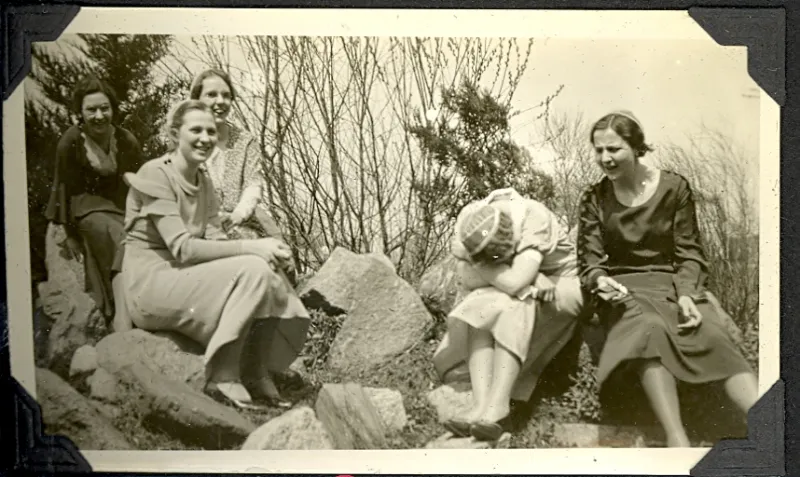
Photo: Mennonite Church USA Archives, No restrictions, via Wikimedia Commons
Ask any junior at a state flagship or a liberal arts college what their week looks like, and you will hear a recitation: fifteen credit hours, an executive board position, a part-time job, an internship application cycle, maybe a research assistantship squeezed in before Friday. The schedule is airtight. It is also, increasingly, a liability.
At Key Collegiate, we spend a great deal of time talking with employers, career services professionals, and recent graduates, and one observation keeps surfacing: the students who struggle most after commencement are rarely the ones who did too little. They are the ones who never had a single unsupervised hour to figure out what they actually wanted.
The Tyranny of the Optimized Transcript
American higher education has quietly adopted the logic of the supply chain. Every semester is inventory; every elective must justify its existence in ROI terms; every Tuesday afternoon is an opportunity cost. Students talk about 'wasting' a class period the way a CFO talks about a failed investment.
This mindset is understandable. Tuition at many private universities now exceeds $60,000 a year, and families are rightly anxious about value. But somewhere along the way, efficiency became an end in itself rather than a means. The result is a generation of graduates who can execute brilliantly against a rubric — and freeze when no rubric is provided.
What Actually Happens in the Empty Block
Consider the difference between two students. The first fills every open slot with an additional minor, a certificate, a second club. The second schedules one deliberately uncommitted block each week — no meeting, no shift, no study group — and uses it badly at first. She scrolls. She wanders. Eventually, out of mild boredom, she audits a philosophy lecture, emails a professor whose book she found in the library, starts a project nobody assigned.
The second student is doing something the first never gets the chance to do: practicing self-direction. Intrinsic motivation is not a personality trait; it is a skill that requires unstructured space to develop. Psychologists have long noted that creativity and initiative flourish in conditions of low external pressure. The corporate world pays a premium for exactly this — people who can identify problems no one handed them.
A Framework for Building One Intentional Empty Block
We are not advocating aimlessness. The distinction is between emptiness by neglect and emptiness by design. A practical approach:
- Protect the block. Put a recurring two-hour window on your calendar each week with no named purpose. Treat it as non-negotiable — because it is where your unassigned thinking happens.
- Lower the stakes on purpose. Use the time for cheap experiments: a skill you are curious about, a conversation with someone outside your major, a draft of something no one will grade. Failure here costs nothing.
- Audit quarterly. At the end of each term, ask what emerged from the block. If nothing did, that is data too — but most students find the block becomes the most generative time they have.
- Resist the résumé reflex. If an activity in the block starts to feel like another line item, step back. The value is in the exploration, not the credential.
The Long Game
Hiring managers routinely say they want candidates with 'ownership' and 'initiative' — qualities that cannot be simulated by another officer title. Graduates who learned to use open time well arrive at their first job already fluent in ambiguity, comfortable proposing ideas without a syllabus prompting them.
College is the last stretch of life in which the cost of experimentation is genuinely low. Spend one hour a week not optimizing, and you may graduate with the one thing no checklist can produce: a clear sense of what you would pursue even if nobody asked you to.