Why Your Mentorship Isn't Moving the Needle — And What to Do About It
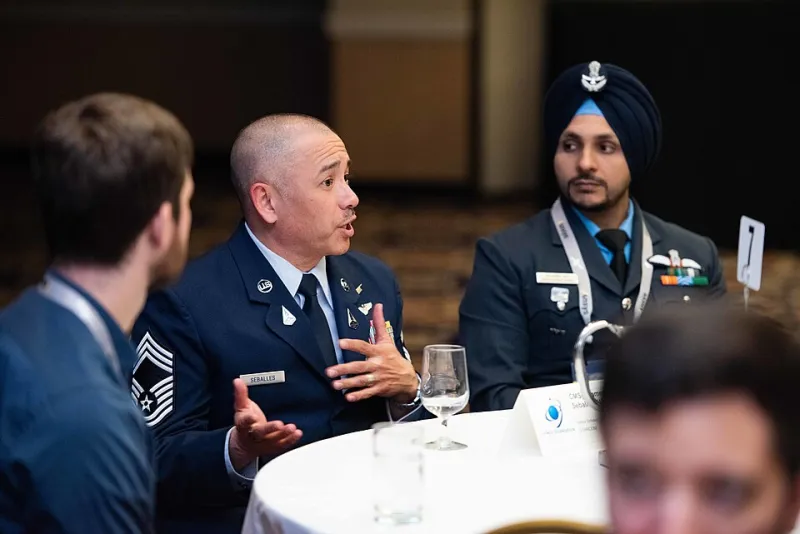
Photo: U.S. Space Force photo by David Grim, Public domain, via Wikimedia Commons
There is a particular kind of frustration that comes from a mentorship that looks good on paper but delivers almost nothing in practice. You have the impressive mentor — perhaps a senior executive, a seasoned alumnus, or a respected faculty advisor — and yet every meeting ends with vague encouragement and a calendar invite you quietly dread scheduling. If that experience sounds familiar, you are far from alone.
For students and young professionals navigating the early stages of their careers, mentorship is frequently cited as one of the most valuable tools available. And it genuinely can be. Research from organizations like MENTOR and findings published by the Harvard Business Review consistently point to effective mentoring as a significant driver of professional advancement, particularly for first-generation college students and those without established industry networks. But the operative word is effective. A mentorship relationship that lacks clarity, structure, and mutual investment does not merely fail to help — it can quietly erode your confidence and your time.
So why do so many of these relationships fall short? The answer usually begins long before the first meeting.
The Expectations Gap Is Where Most Mentorships Break Down
The most common reason a mentor relationship underperforms is not personality conflict or a lack of effort. It is misalignment — specifically, a fundamental mismatch between what the mentee expects and what the mentor believes they have agreed to provide.
Consider how most collegiate mentorships begin. A student reaches out through a campus program, a LinkedIn message, or an alumni networking event. The mentor agrees to connect, perhaps out of genuine goodwill, and suddenly both parties are in a relationship that neither has clearly defined. The student arrives hoping for career guidance, industry introductions, and candid feedback on their professional trajectory. The mentor assumes they are there to answer occasional questions and offer general encouragement.
Neither expectation is wrong. They are simply different — and without an explicit conversation to reconcile them, the relationship drifts toward the path of least resistance: surface-level pleasantries and periodic coffee chats that feel productive in the moment but produce little lasting value.
The fix begins with what leadership development professionals often call a "mentorship charter" — a brief, mutual agreement that establishes the purpose of the relationship, the frequency of meetings, the specific areas of focus, and the way progress will be measured. This does not need to be a formal document. A candid conversation in your first or second meeting, in which you articulate what you hope to gain and invite the mentor to share what they are best positioned to offer, accomplishes the same goal. Clarity, established early, is the single most reliable predictor of a mentorship's long-term value.
Passive Participation Is a Silent Relationship Killer
Even when expectations are reasonably aligned, many mentorships stall because the mentee defaults to a passive role. They wait for the mentor to drive the agenda. They arrive at meetings without prepared questions. They receive advice graciously but never follow up on whether they acted on it.
This pattern is understandable. For many students, the mentor occupies a position of significant authority, and the instinct to defer feels both respectful and safe. But mentors — particularly those with demanding professional schedules — are drawn to mentees who demonstrate initiative. The relationship is most energizing, and most productive, when the mentee arrives with a specific challenge, a concrete question, or a recent decision they want to think through out loud.
Practically speaking, this means preparing an agenda before every meeting, even an informal one. It means sending a brief recap email afterward that summarizes what you discussed and what you committed to doing. It means following up, genuinely, on the advice you received — and reporting back on the outcome. These habits signal that you take the relationship seriously, and they give your mentor something meaningful to engage with rather than the open-ended invitation to simply "share wisdom."
When Infrequent Contact Becomes Invisible Progress
Another structural failure that quietly undermines mentorships is inconsistent contact. Many collegiate mentor relationships begin with genuine momentum — monthly meetings, responsive communication, a real sense of forward movement — and then gradually lose rhythm as academic demands intensify, internships begin, or the mentor's schedule tightens.
The challenge is that progress in a mentorship is cumulative. A mentor who meets with you twice a year cannot build the contextual understanding of your goals, your challenges, and your growth that makes their guidance genuinely useful. They are perpetually catching up rather than moving forward with you.
If sustaining monthly meetings is not realistic for both parties, consider restructuring the relationship rather than letting it fade. A brief quarterly video call paired with periodic email updates can maintain continuity without demanding excessive time. The key is consistency over frequency — a predictable rhythm, however modest, preserves the relationship's momentum and keeps your mentor meaningfully invested in your trajectory.
A Diagnostic Framework: Is Your Mentorship Worth Saving?
Before investing energy in revitalizing a stalled mentorship, it is worth asking three honest questions:
First, is there genuine alignment on purpose? If you and your mentor have fundamentally different views of what this relationship is for, the most productive path forward may be a direct, respectful conversation to renegotiate the terms — or, if that conversation is not possible, to gracefully transition out and seek a relationship that better matches your current needs.
Second, are you showing up as an active participant? If the mentorship has stalled and you have been waiting for your mentor to drive the agenda, the relationship is not broken — it simply needs you to step into the driver's seat. Prepare for your next meeting with three specific questions and a clear update on something you have been working on. The change in dynamic may surprise you.
Third, has this mentor's relevance to your goals shifted? People grow, industries evolve, and the mentor who was perfectly suited to your sophomore-year goals may not be the right guide for the professional you are becoming. Recognizing this is not a failure — it is a sign of your own development. A mentor relationship can be honored and concluded with gratitude while you pursue one that is better calibrated to where you are headed.
Building the Next Mentorship Intentionally
If you are starting fresh, the single most important investment you can make is in identifying a mentor whose experience aligns specifically with your goals — not simply someone impressive or well-connected in a general sense. A mentor who has navigated the exact transition you are preparing for, or who works within the industry you are targeting, will provide guidance that is immediately applicable rather than broadly inspirational.
Approach the initial outreach with specificity. Rather than asking someone to "be your mentor," identify one concrete area where their perspective would be valuable and request a single conversation. If that conversation is productive, a longer-term relationship can develop organically from there. Many of the most effective mentorships begin not with a formal ask but with a focused, well-prepared request for a specific kind of input.
At Key Collegiate, we believe that unlocking your potential requires more than ambition — it requires the right relationships, built with intention and maintained with discipline. A mentorship that works is not a passive gift. It is something you construct, actively, from the very first conversation.